
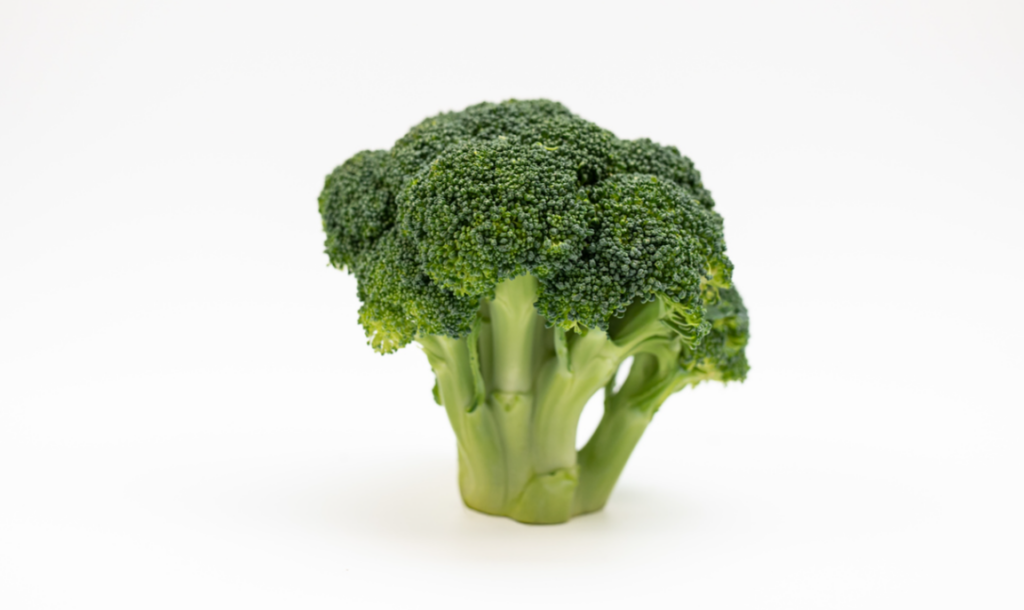
Broccoli has a reputation as a health food, and for once the reputation holds up. It is genuinely dense in two vitamins, it carries fiber, and it is about 60 calories a serving on a BIBIBOP bowl.
What follows is what is actually in it, with the numbers, what those nutrients do, and how preparation changes what you get. Most broccoli articles skip that last part, and it is the part that changes anything on a weeknight.
What is actually in broccoli
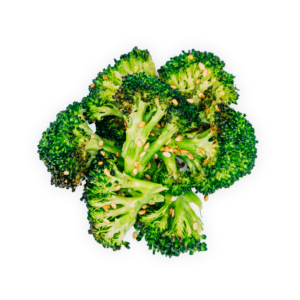
Two standout vitamins, plus fiber
Broccoli’s nutrition is front-loaded into vitamin C and vitamin K. It also contributes fiber and folate, and it belongs to the cruciferous family alongside cabbage, kale, cauliflower and bok choy, which is where its sulfur compounds come from.
Here is what half a cup gets you, using figures from the National Institutes of Health Office of Dietary Supplements.
Vitamin C
Half a cup of cooked broccoli has 51 mg, which is 57 percent of the Daily Value. Raw is 39 mg, or 43 percent. A full cup cooked clears the daily target on its own.
Vitamin K
Half a cup of chopped, boiled broccoli has 110 mcg against a Daily Value of 120 mcg. That is 92 percent from a single side portion, which is the most striking number on the list.
Folate
52 mcg DFE per half cup cooked, or 13 percent of the Daily Value. A useful contribution, though a smaller one than the vitamin numbers above.
Fiber
Broccoli is a whole vegetable with its structure intact, so it carries fiber in a form your gut can use. Fiber supports regular digestion and helps a meal stay satisfying for longer.
What vitamin C and vitamin K actually do
Vitamin C is required to make collagen, the protein that holds skin, blood vessels and connective tissue together. It also helps the body absorb iron from plant sources, which is why pairing broccoli with beans or tofu is more useful than eating either alone. It is water soluble, so the body does not store it and the supply has to be topped up regularly.
Vitamin K is the one people underrate. It is essential for blood clotting and for bone metabolism, and broccoli is one of the better vegetable sources of it. If you take a blood thinner such as warfarin, vitamin K intake is something to keep steady rather than swing around, so a sudden large increase in leafy greens is worth mentioning to your doctor.
On folate, one correction worth making. Broccoli contributes folate, and folate matters during pregnancy. But food folate alone is not considered sufficient for that purpose. NIH guidance is that women who could become pregnant should get 400 mcg of folic acid a day from supplements or fortified foods, in addition to what a varied diet provides. Broccoli helps. It does not replace that.
Raw, steamed or roasted
This is the part worth knowing. How you cook broccoli changes how much of the vitamin C survives, and the difference between methods is bigger than the difference between brands or bunches.
Raw keeps the most vitamin C and the most active sulfur compounds, because nothing has been heated or leached out. The texture is the trade-off.
Steaming and roasting soften it without submerging it, so less of the water-soluble vitamin C escapes. Roasting also caramelizes the edges, which is why roasted broccoli converts skeptics.
Boiling is the lossy one. Vitamin C is water soluble, so a good share of it ends up in water you pour down the drain. Cooked broccoli still tests higher per half cup than raw, because it packs down denser, but boiling costs you more than the other methods.
How to buy and store broccoli
Look for firm stems and tight, closed florets in a deep green. Yellowing florets mean it is past its best, and a rubbery stem means it has been sitting.
Store it in the refrigerator, unwashed, wrapped loosely so air can move around it. A damp paper towel around the stem helps. Handled that way it holds for about a week. Wash it just before cooking, not before storing, because trapped moisture speeds up the yellowing.
Broccoli at BIBIBOP
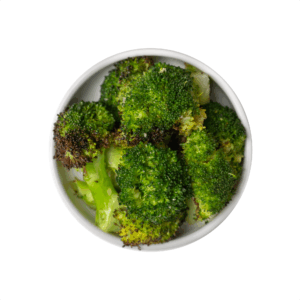
Roasted Sesame Broccoli
Roasted rather than boiled, at 60 calories a serving, and available as an unlimited vegetable on any bowl or salad. Roasting is the preparation that keeps the most vitamin C of the cooked options, and the sesame is what makes it taste like something you would order rather than something you should eat.
It pairs with almost anything on the line. On a bowl with Purple Rice, Korean BBQ Beef and Kimchi it gives you something green and firm against the soft rice. With Organic Tofu and Bean Sprouts it carries a vegetarian bowl. Add Gochujang on top and the roasted edges take the sauce well.
Everything at BIBIBOP is gluten-free, including the sauces, because every location is certified through the Gluten Intolerance Group as a Validated Gluten-Free Safe Spot. BIBIBOP uses tamari rather than soy sauce, which is brewed with wheat. That is what makes a Korean menu gluten-free in the first place. More on how that works: Behind the Scenes: How We Ensure Gluten-Free Dining.
Broccoli FAQs
What are the main benefits of eating broccoli?
Vitamin C, vitamin K and fiber, in that order of significance. Half a cup of cooked broccoli covers 57 percent of the Daily Value for vitamin C and 92 percent for vitamin K. It also contributes folate and is low in calories for the volume you get.
Is broccoli better raw or cooked?
Both work. Raw preserves more vitamin C and more of the active sulfur compounds. Cooked broccoli tests higher per half cup because it packs denser, and roasting or steaming loses less vitamin C than boiling. Eat it the way you will actually eat it.
Is broccoli good for bones?
Through vitamin K, which is essential to bone metabolism, and broccoli is one of the stronger vegetable sources of it. Broccoli is sometimes described as calcium-rich, which overstates it. The bone case for broccoli rests on vitamin K, not calcium.
How much broccoli should I eat?
There is no specific target for broccoli itself. The Dietary Guidelines set vegetable intake overall, and broccoli counts toward it. One thing to watch: if you take warfarin or another blood thinner, keep your vitamin K intake consistent rather than suddenly increasing it, and talk to your doctor.
How long does fresh broccoli keep?
About a week in the refrigerator if you store it unwashed and loosely wrapped, with a damp paper towel around the stem. Wash it right before cooking rather than before storing.
Does BIBIBOP have broccoli?
Yes. Roasted Sesame Broccoli is on the line as an unlimited vegetable, at 60 calories a serving, and it goes on any bowl or salad.
Add broccoli to your bowl
The easiest way to eat more broccoli is to stop treating it as a side dish you have to get through. Roasted, seasoned and mixed into a bowl with rice and a protein, it stops being a chore.
Find a BIBIBOP near you and build one. New to BIBIBOP? Join BIBIBOP Rewards and your first bowl is on us with a minimum $5 spend.