
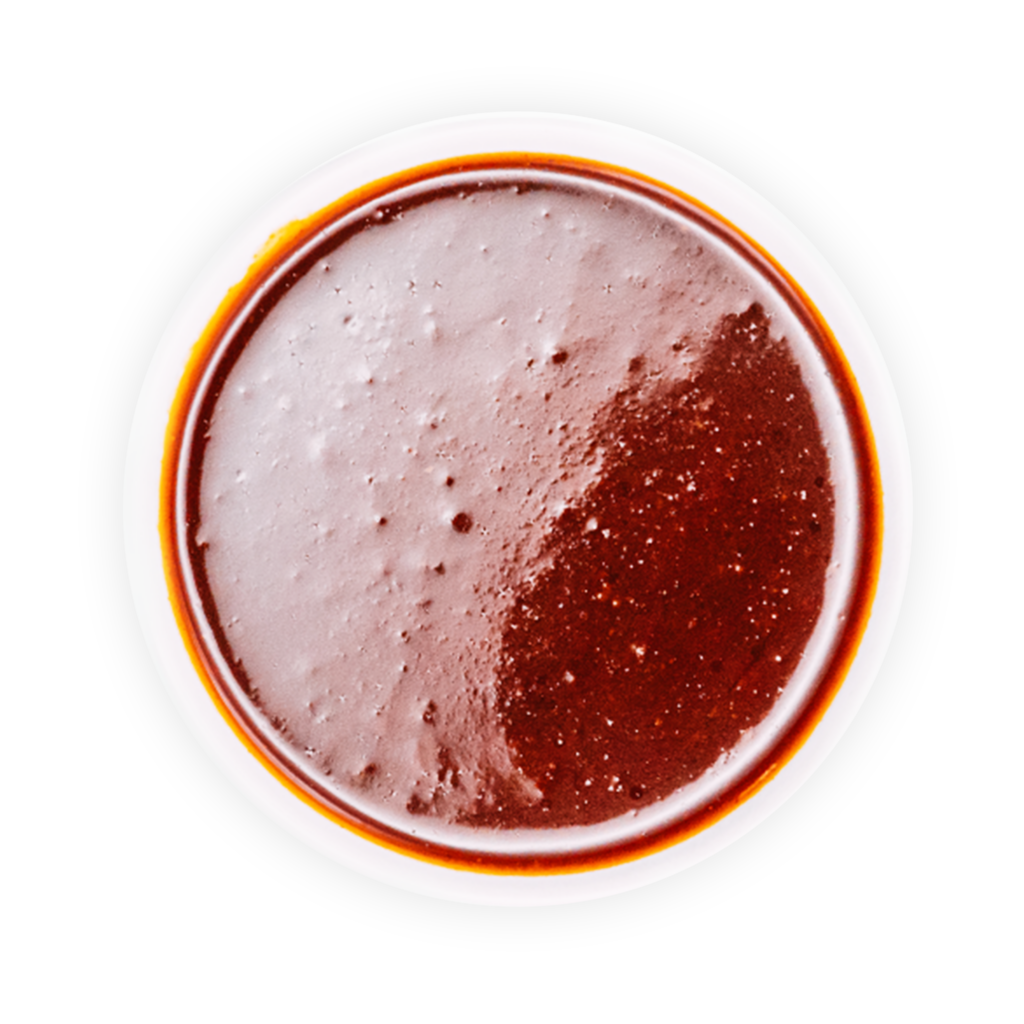
Gochujang is the deep red, slightly sticky chili paste behind most of the food you think of as Korean. It goes into stews, marinades and dipping sauces, and at BIBIBOP it is one of five sauces you can finish a bowl with. If you have never had it, the short version is that it is spicy, but not the kind of spicy that ends a meal.
Here is what is actually in it, what it tastes like, and why the gluten question matters more than most people realize.
What is gochujang?
Gochujang is a fermented chili paste made from red chili powder, glutinous rice, fermented soybeans and salt. The name breaks down cleanly. Gochu means chili pepper. Jang means fermented paste or sauce.
It is thick enough to hold its shape on a spoon, and the color runs from bright red to nearly brown depending on how long it has aged.
Gochujang is not a hot sauce. Hot sauce is usually chilies and vinegar, built to deliver heat and not much else. Gochujang is a fermented food. It is closer in spirit to miso than to sriracha, and heat is only one of the things it does.
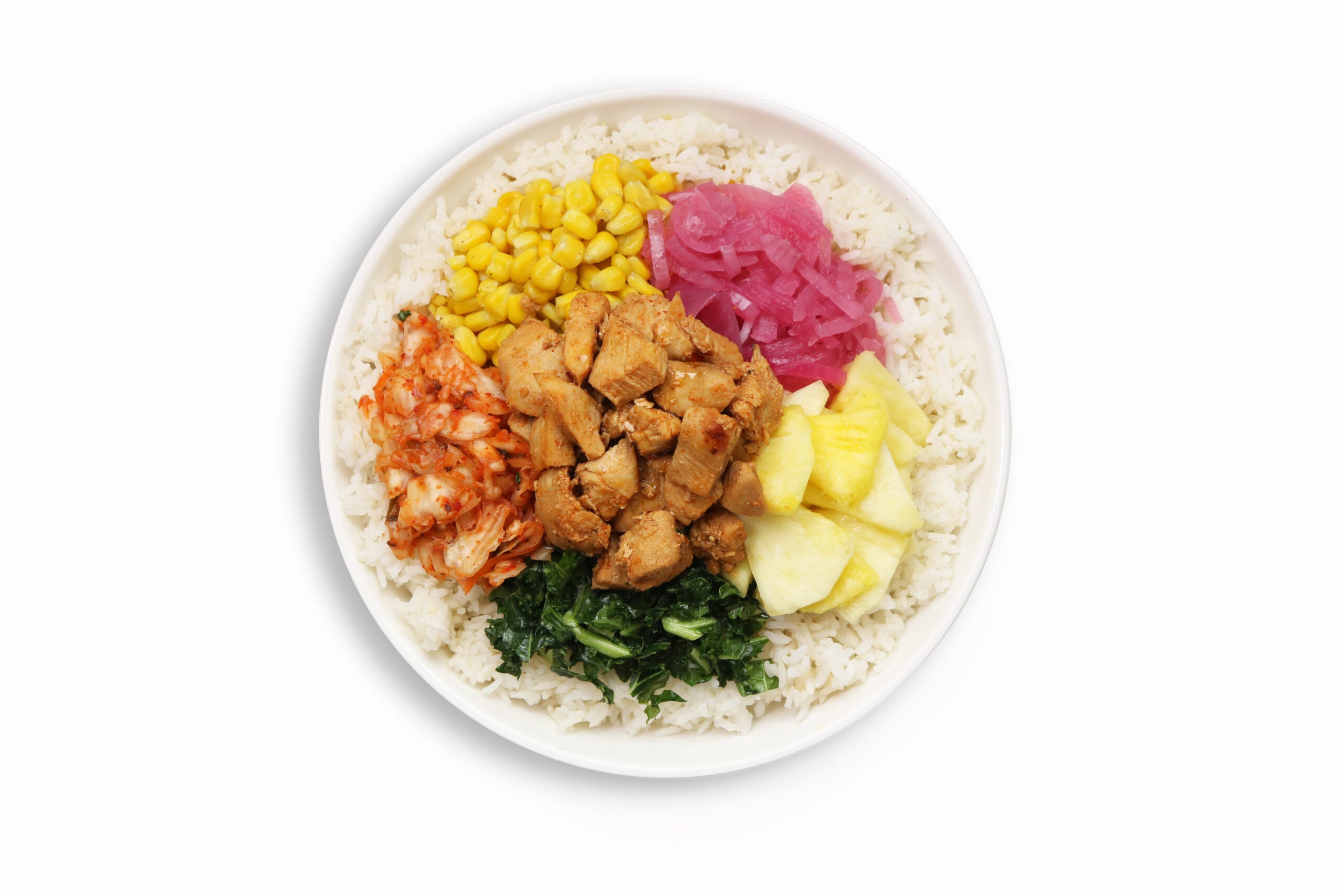
Gochujang is one of the three jangs
Korean cooking rests on three fermented sauces, known together as the jangs. Learn these three and most Korean seasoning starts to make sense.
- Ganjang, Korean soy sauce. Thin, salty, poured and stirred into almost everything.
- Doenjang, fermented soybean paste. Thick and earthy, the base of doenjang jjigae.
- Gochujang, fermented chili paste. Sweet, savory and spicy at the same time.
All three start in the same place: meju, blocks of cooked soybeans left to ferment. Ganjang is the liquid drawn off while the meju sits in brine. Doenjang is the paste left behind. Gochujang takes fermented soybean powder and builds chili and rice on top of it.
What gochujang is made of
Four ingredients, plus time.
- Gochugaru, Korean red chili powder. Color and heat.
- Glutinous rice. The starches break down into sugar during fermentation, which is where the sweetness comes from.
- Fermented soybean powder. Savory depth.
- Salt.
Traditionally the mix is packed into earthenware crocks and left outdoors to ferment for months, sometimes years. Sunchang, a county in North Jeolla Province, is the region Koreans most associate with it.
Gochujang is also the youngest of the three jangs. Chili peppers did not reach Korea until the late 16th century, and the first written gochujang recipes appear in the 18th century. Ganjang and doenjang are far older.
What does gochujang taste like?
Sweet first, then savory, then heat.
The sweetness comes from fermented rice rather than from sugar poured in at the end. The savory side comes from the soybeans, and it is the same kind of depth you get from miso or aged soy sauce. The heat arrives last and sits on the front of the tongue instead of building in the back of your throat.
BIBIBOP’s gochujang is a medium spice. There is a slight heat on the tongue, and then it fades. You can put it across a whole bowl without regretting it halfway through.
How spicy is gochujang?
Less than most first timers expect.
Korea has its own scale for this. The Gochujang Hot taste Unit was agreed on by the Korean government and the country’s major gochujang producers, and it sorts products into five bands from mildly hot up to extremely hot. Most gochujang on the market sits in the lower and middle bands, not the top.
BIBIBOP’s gochujang lands in the middle. Medium spice, slight heat, nothing that flattens the rest of the bowl.
If you want more heat, order Spicy Chicken or add Spicy Sriracha. If you want less, Yum Yum Sauce and Sesame Ginger are the mild picks.
Is gochujang gluten-free?
Sometimes. Often not. This is worth checking every time.
Traditional gochujang uses barley malt powder to convert the rice starches into sugar, and barley contains gluten. Plenty of commercial jars also list wheat flour outright. So a jar of gochujang off a grocery shelf is not gluten-free unless the label says so.
BIBIBOP’s gochujang is gluten-free, because the whole kitchen is. Every BIBIBOP location is certified through the Gluten Intolerance Group as a Validated Gluten-Free Safe Spot, which means the sauces get checked along with everything else on the line.
The same logic applies to soy sauce. Most soy sauce is brewed with wheat. BIBIBOP uses tamari instead, which is not. That single swap is a large part of how a Korean menu stays gluten-free at all.
More on how that works: Behind the Scenes: How We Ensure Gluten-Free Dining.
How to order gochujang at BIBIBOP
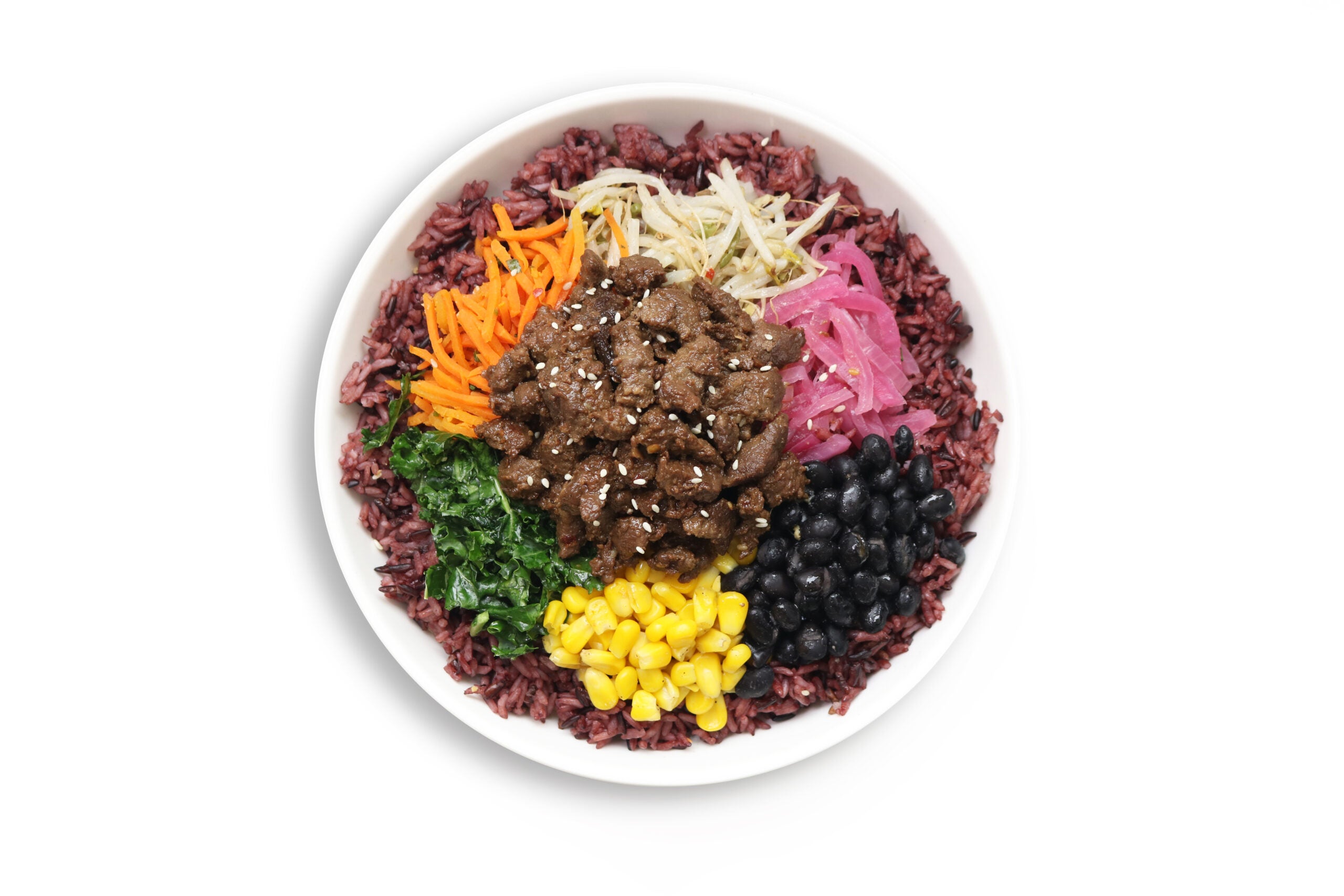
Gochujang is one of five sauces. Build the bowl first, then finish with it.
- Korean BBQ Beef with White Rice. The beef is already sweet and savory. The sauce runs the same direction and doubles it.
- Organic Tofu with Purple Rice, Roasted Sesame Broccoli and Kimchi. Tofu takes on whatever you give it, so gochujang does the heavy lifting.
- Korean Crispy Chicken with Crispy Romaine. Cold, crunchy base against a warm, sweet, slightly spicy sauce.
- Steak with Purple Rice and Pickled Red Onion. The onion cuts the sweetness.
Remember that Korean BBQ Beef and Steak are two different proteins on the menu. They are not the same thing prepared two ways.
Gochujang FAQ
Is gochujang the same as sriracha?
No. Sriracha is a chili and vinegar sauce built for heat and tang. Gochujang is a fermented paste built for sweetness, savoriness and heat together. BIBIBOP carries both, and they do different jobs.
Is gochujang spicy?
Mildly to moderately. BIBIBOP’s is a medium spice with a slight heat on the tongue that fades quickly.
Is gochujang gluten-free?
Not automatically. Many commercial versions contain barley malt or wheat flour. BIBIBOP’s is gluten-free, and so is everything else on the line, because the kitchen is certified gluten-free.
What is gochujang made of?
Red chili powder, glutinous rice, fermented soybeans and salt, fermented over months.
Does gochujang need to be refrigerated?
Once a jar is opened at home, yes. Keep it sealed and cold and it will hold for a long time.
What are the three jangs?
Ganjang, doenjang and gochujang. Korean soy sauce, fermented soybean paste and fermented chili paste. All three come from the same fermented soybean base.
Try it on your next bowl
Gochujang is the easiest way to make a bowl taste distinctly Korean, and at BIBIBOP it costs nothing extra to try. Build a bowl, ask for gochujang on top, and see where it lands for you.
Find a BIBIBOP near you and order today. New to BIBIBOP? Join BIBIBOP Rewards and your first bowl is on us with a minimum $5 spend.